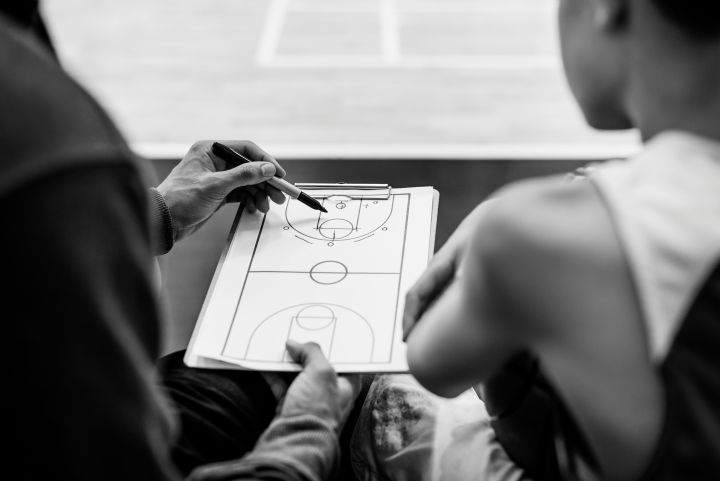
People step into basketball coaching for many different reasons.
Some are former players who want to stay connected to the game they love. Others are passionate fans looking for a more active role in basketball. Many are parents who volunteer because their child’s team needs a coach for the season.
Regardless of how they arrive, most quickly discover that coaching basketball is far more challenging than it appears from the sidelines.
Creating productive practice plans, managing player rotations and playing time, developing athletes, and making split-second decisions during games all require a unique combination of skills and preparation.
Yet despite these challenges, coaching can be one of the most rewarding experiences in sports.
Winning a close game on a buzzer-beater is certainly exciting.
But seeing a young player make their first non-dominant-hand layup, gain confidence, or watching a group of individuals grow into a true team can be equally satisfying.
This guide explores the essential skills and responsibilities required to become an effective basketball coach, including practice planning, player development, team culture, game management, and continuous improvement.
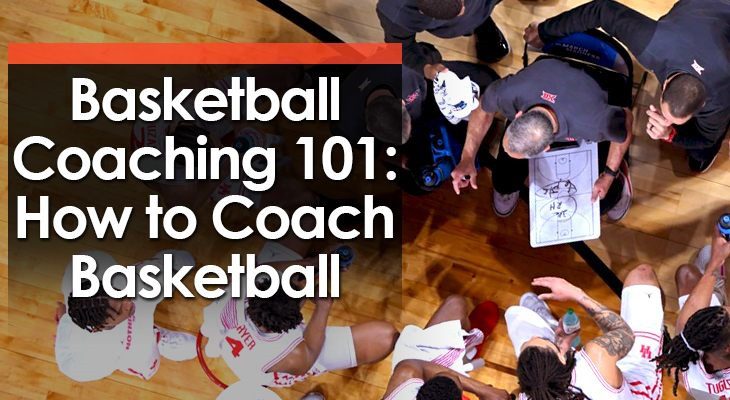
1. Understanding the Role of a Basketball Coach
Winning games is undoubtedly part of a coach’s job.
However, viewing victories as the only measure of success overlooks the broader impact a coach can have on players and a program.
Leadership expert John Whitmore once said:
“Coaching is unlocking a person’s potential to maximize their growth.”
This quote perfectly captures the responsibility of a basketball coach.
Beyond building a competitive team, coaches play a crucial role in helping athletes become the best versions of themselves both on and off the court. This includes developing basketball skills, leadership qualities, discipline, confidence, and teamwork.
One of the most effective ways to accomplish this is by establishing a clear coaching philosophy. Your philosophy influences everything—from offensive and defensive systems to practice structure and team standards.
Above all, the most important responsibility of a basketball coach is serving as a positive role model.
Young athletes need adults they can respect and learn from, and coaches often become some of the most influential figures in their lives.
Two qualities are especially important:
Respect
Treat players, officials, opponents, and fellow coaches with respect. Demand the same behavior from your team.
Commitment
Emphasize the importance of putting the team first. Players should understand that success requires sacrifice, accountability, and dedication to the group.
Remember: your players will often imitate your behavior more than they follow your instructions. The example you set can leave a lasting impression long after the season ends.
2. Developing Essential Coaching Skills
Effective basketball coaches possess a variety of skills beyond knowledge of the game.
a. Basketball Knowledge
A coach must understand offensive and defensive concepts, game strategy, player roles, and situational basketball. The ability to identify strengths, weaknesses, and opportunities gives coaches a significant advantage.
b. Communication Skills
Knowledge alone is not enough.
Coaches must communicate clearly, explain concepts effectively, and motivate players to perform at their highest level.
c. Teaching Ability
Teaching is different from knowing.
Great coaches understand how to break down skills, simplify concepts, and help players apply what they learn during real game situations.
d. Leadership Skills
Every coach is a leader.
Players need someone they can trust, follow, and respect. Strong leadership helps establish discipline, confidence, and accountability throughout the team.
e. Adaptability
Every season is different.
Different players, personalities, and circumstances require coaches to adapt their strategies, rotations, and systems to fit the team’s needs.
f. Patience
Not every player develops at the same pace.
Patience allows athletes to learn without fear of failure and creates an environment where improvement can happen naturally.
3. Creating a Strong Team Culture
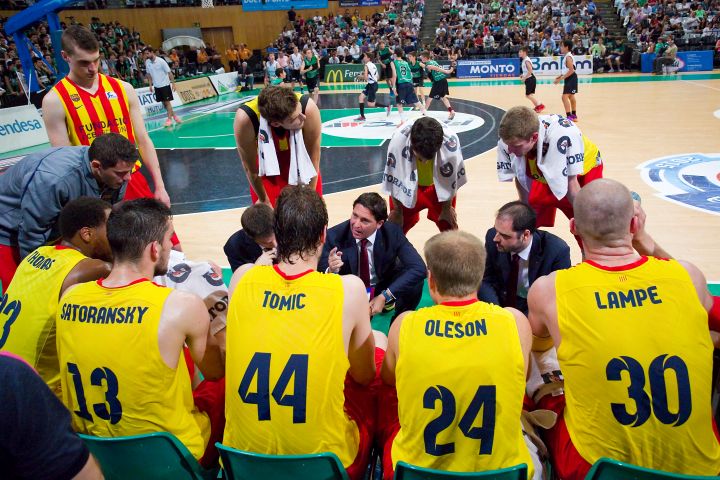
Team culture has become one of the most discussed topics in modern sports.
But what does a strong culture actually mean?
It begins with clearly defined values and expectations.
Whether developed by the coaching staff alone or with player input, team standards should be communicated consistently and reinforced throughout the season.
When those standards are ignored, appropriate consequences must follow.
Strong team culture also depends on trust, chemistry, and teamwork.
Players who genuinely care about each other tend to communicate better, compete harder, and hold one another accountable.
Building relationships outside practice can be extremely valuable. Team dinners, social activities, and community events often strengthen connections that translate directly to improved performance on the court.
One of the biggest challenges coaches face is managing different personalities.
Every player has unique goals, motivations, and expectations.
Clearly defining each player’s role helps align the team and reduces confusion.
A strong culture does not guarantee championships, but it creates an environment where players enjoy the experience, develop as people, and maximize their potential.
4. Planning and Running Effective Practices
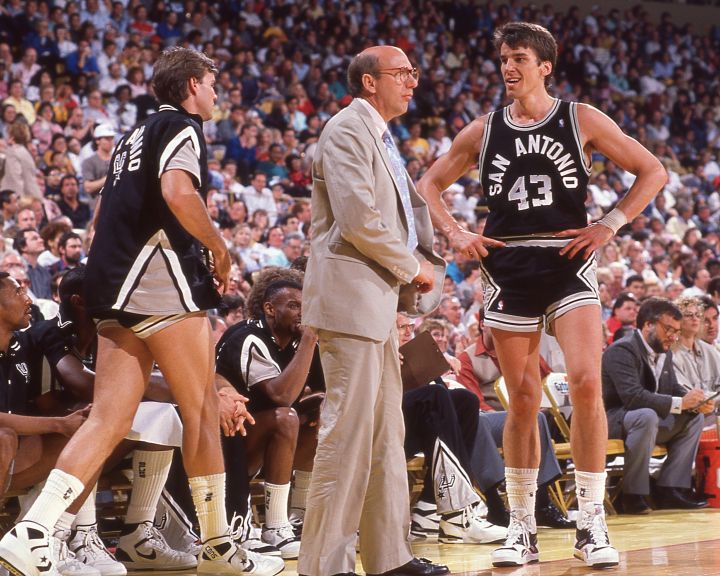
Practice planning is often one of the most difficult tasks for new coaches.
Many coaches assume that because they attended practices as players, designing them will be easy.
In reality, creating productive practices requires careful planning and organization.
One rule should always be followed:
Never enter practice without a plan.
Whether you are coaching your first season or your twentieth, every session should have a clear purpose.
Your practice plan can be simple or highly detailed, but it should always provide direction and maximize available time.
A common structure includes:
- 50% skill development
- 25% team strategy
- 25% games and competitive situations
Practices should regularly include shooting, passing, dribbling, defense, and decision-making drills.
One challenge many coaches face is balancing skill development, conditioning, and game preparation.
The most efficient solution is using game-like drills.
Small-sided games are particularly effective because they create realistic situations while providing players with more repetitions and decision-making opportunities.
These drills encourage competition, improve basketball IQ, and accelerate player development.
5. Teaching Basketball Fundamentals
Regardless of age or skill level, fundamentals should remain a top priority.
Even the most sophisticated offensive and defensive systems are ineffective if players lack the skills required to execute them.
Offensive Fundamentals
Shooting should receive consistent attention.
Teams cannot rely solely on layups, so players must develop confidence and consistency from the perimeter.
Game-speed shooting repetitions are essential.
In addition, players should regularly work on:
- Ball handling
- Passing
- Footwork
- Decision-making
Whenever possible, these skills should be practiced against defenders to create realistic game situations.
Defensive Fundamentals
Defense is sometimes overlooked, but it remains equally important.
Players should learn:
- Proper defensive stance
- Positioning
- Closeouts
- Help defense
- Communication
Strong defensive habits often separate average teams from successful ones.
A Simple Method for Teaching New Skills
- Introduce the skill.
- Demonstrate and explain it.
- Allow players to practice independently.
- Provide significant repetition.
- Incorporate the skill into live play.
This process helps players understand not only how to perform a skill but also when and why to use it.
6. Game Strategy and In-Game Adjustments
Game management can be divided into two phases:
1. Pre-Game Planning
2. In-Game Adjustments
Defensive Philosophy
At youth and developmental levels, man-to-man defense should be the foundation.
The principles learned through man-to-man defense transfer to virtually every defensive system players will encounter later in their careers.
Offensive Philosophy
Offensively, coaches should focus less on memorizing plays and more on teaching players how to play.
Motion offenses are particularly effective because they encourage players to read the defense, make decisions, and understand spacing.
Young athletes should also avoid being locked into specific positions.
Just because a player is currently the tallest on the team does not mean they should only learn post skills.
Develop complete basketball players capable of playing multiple roles.
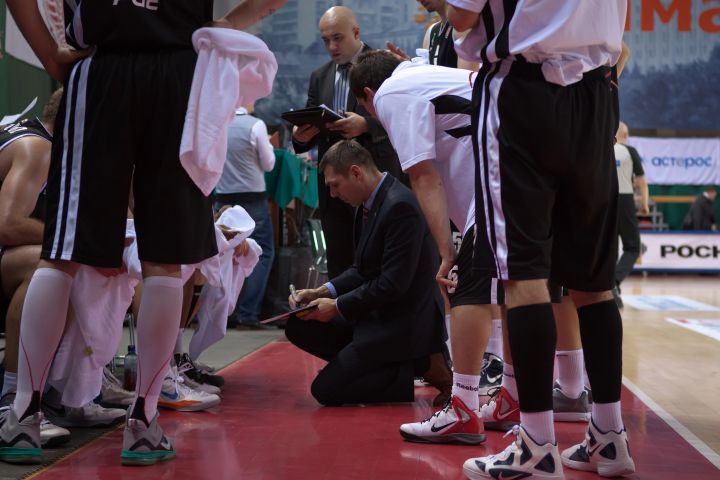
Making In-Game Adjustments
Once the game begins, coaches must constantly evaluate and adjust.
This includes:
- Managing substitutions
- Calling timeouts
- Adjusting defensive matchups
- Selecting inbound plays
- Designing late-game situations
Experience improves decision-making, but preparation is equally important.
Entering games with established rotations and trusted late-game sets can reduce stress and improve execution when critical moments arrive.
7. Player Development and Long-Term Growth
For youth coaches especially, player development should outweigh short-term victories.
Few people remember who won a fourth-grade championship.
What matters is helping athletes reach their full potential.
One effective strategy is creating individualized development plans.
Every player has unique strengths and weaknesses, so personalized workouts often produce the best results.
Positionless basketball is another powerful development tool.
By allowing players to learn all aspects of the game, coaches prepare them for future opportunities regardless of how their bodies develop over time.
Mental development is equally important.
Decision-making should be incorporated into drills whenever possible.
Players learn more when they must react, analyze, and solve problems rather than simply repeat movements without opposition.
Film study can also significantly improve basketball IQ by helping athletes recognize successful and unsuccessful decisions.
8. Handling Challenges as a Coach
Coaching is rewarding, but challenges are inevitable.
a. Managing Losing Streaks
Losing can affect confidence and motivation.
Coaches should remain positive, highlight improvements, and keep players focused on growth rather than results.
b. Resolving Player Conflicts
Disagreements between teammates should be addressed immediately.
Open communication and honest conversations often prevent small issues from becoming major problems.
c. Handling Attitude Problems
Consistency is essential.
If certain behaviors are unacceptable, the same standards must apply to every player.
Fairness builds trust and credibility.
d. Working with Parents
Managing parent relationships is one of the most challenging aspects of coaching.
Helpful strategies include:
- Holding a preseason parent meeting.
- Clearly explaining team policies.
- Establishing a 24-hour waiting period after games.
- Having another adult present during difficult conversations.
- Listening before responding.
- Focusing only on the specific player involved.
- Offering constructive solutions and development goals.
When handled professionally, parent interactions can become productive partnerships rather than conflicts.
9. Continuing Your Growth as a Coach
The best coaches never stop learning.
Fortunately, modern technology provides countless opportunities for professional development.
Read Books
Books provide valuable insight into the philosophies, leadership styles, and experiences of successful coaches.
Attend Coaching Clinics
Whether in-person or virtual, coaching clinics offer access to new ideas, strategies, and perspectives.
Watch Educational Content
Instructional videos and coaching resources provide detailed breakdowns of drills, systems, and practice methods.
Follow Basketball Experts
Social media platforms allow coaches to learn from analysts, professional coaches, and basketball educators around the world.
Listen to Podcasts
Podcasts offer a convenient way to learn while driving, exercising, or completing daily tasks.
Build Relationships with Other Coaches
Networking with fellow coaches creates opportunities to exchange ideas, discuss challenges, and learn from different experiences.
Many of the best coaching lessons come through conversations with peers.
Conclusion
Becoming an effective basketball coach requires much more than understanding the game.
It involves leadership, teaching, communication, organization, and a genuine commitment to helping players grow.
Designing productive practices, teaching fundamentals, building culture, developing athletes, and managing challenges are all part of the journey.
Some lessons will come through study.
Others will only come through experience.
The key is to remain patient, continue learning, and focus on helping your players become better athletes and better people.
Over time, your confidence, effectiveness, and impact as a coach will continue to grow.