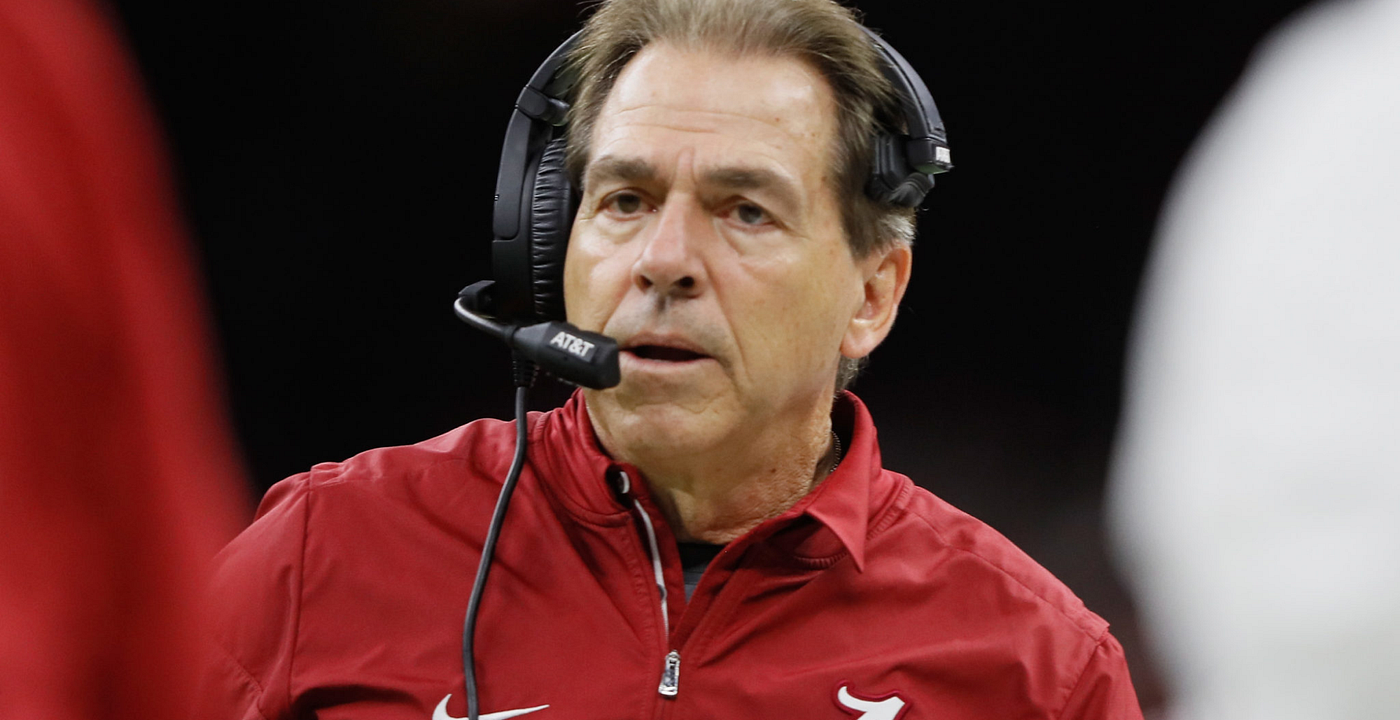
Entering His 12th Season at Alabama, Nick Saban Has Done More Than Win Championships—He Has Changed the Entire Landscape of College Football
Five SEC championships. Five national titles. An average of 12.5 victories per season.
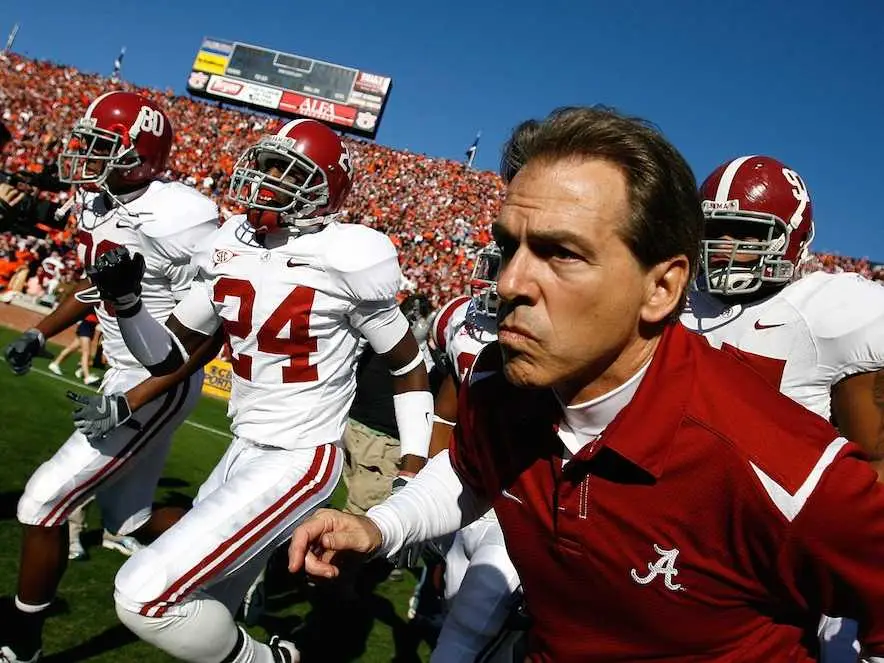
Nick Saban’s decade-plus run at Alabama stands among the most dominant dynasties in modern sports history. Yet perhaps his most remarkable achievement extends beyond the trophies and banners. His influence has fundamentally altered how college football programs operate, recruit, develop talent, and pursue success.
As rivals have tried to catch Alabama on the field, many have found themselves adopting the very methods that helped create the Crimson Tide’s dominance. Piece by piece, year after year, Saban’s famous “Process” has spread across the sport, reshaping college football from the inside out.
Building a Better Alabama
The impact of Nick Saban is most visible within the Southeastern Conference, the league he has ruled for more than a decade.
The reality is not simply that every SEC program wants to beat Alabama. In many cases, schools have attempted to become Alabama.
Four of Saban’s former assistants eventually became SEC head coaches: Jimbo Fisher, Kirby Smart, Will Muschamp, and Jeremy Pruitt. Beyond that, nine of the conference’s thirteen football programs have employed coaches who previously worked under Saban at some point in their careers.
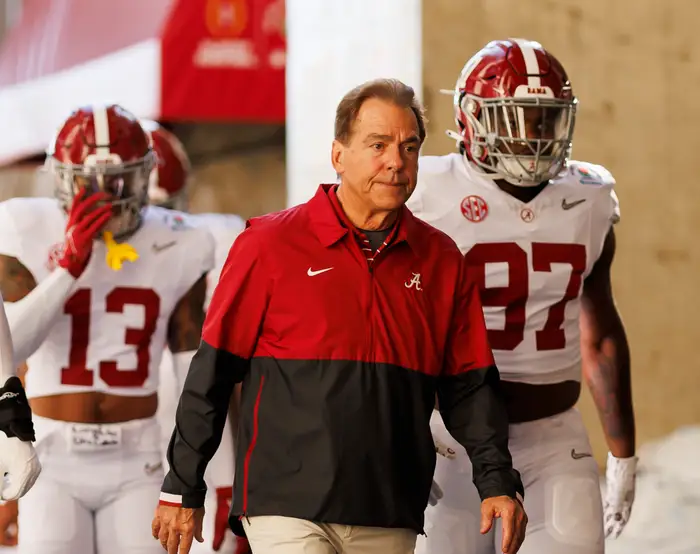
Even schools without direct coaching ties to Saban have sought pieces of his organizational structure. Arkansas, for example, hired a former Alabama player personnel staff member as one of its recruiting coordinators, hoping to replicate some of the methods that fueled the Tide’s success.
As Saban’s coaching tree expanded throughout the conference, it simultaneously increased pressure on rival coaches. Programs that once celebrated conference contention suddenly found themselves judged against Alabama’s championship standard.
When Georgia parted ways with longtime head coach Mark Richt in 2015 despite a remarkable 145–51 record over fifteen seasons, Saban openly questioned the decision.
“I don’t know what the world’s coming to in our profession,” he remarked.
Ironically, it was Saban himself who had helped create that reality.
A Tide That Changed Expectations
The numbers tell a revealing story.
Before Saban arrived at Alabama, the average tenure of a Power Five head coach was approximately 6.27 seasons.
Since his arrival, that number has fallen dramatically to just 3.75 seasons.
The reason is simple: winning consistently is no longer enough.
Like Les Miles at LSU and many other coaches across the country, Mark Richt ultimately lost his position because he was unable to match Alabama’s level of dominance. While he built competitive teams and won plenty of games, he never captured a national championship and struggled against Saban in key matchups.
Programs across the nation began measuring success differently. Conference titles and ten-win seasons no longer guaranteed job security when Alabama was setting a new standard every year.
The imitation extends beyond coaching staffs.
Over the past decade, virtually every SEC institution has invested tens or even hundreds of millions of dollars into football facility upgrades. From state-of-the-art training centers to recruiting complexes and football operations buildings, schools have attempted to replicate the infrastructure that helped Alabama become a recruiting powerhouse.
LSU, for instance, launched major renovations to its football facilities, including upgrades to the operations center originally built during Saban’s final season in Baton Rouge.
The objective was clear: build a program capable of matching the gold standard established in Tuscaloosa.
Working Harder
NCAA regulations place limits on the number of official assistant coaches, strength coaches, and graduate assistants that a football program may employ.
However, those rules say very little about the broader support staff surrounding the team.
Nick Saban recognized this opportunity earlier than most and transformed it into a competitive advantage.
Today, Alabama employs more than forty non-coaching staff members dedicated to supporting football operations. Among them are analysts, recruiting specialists, graphic designers, videographers, player development coordinators, and numerous other personnel whose sole focus is enhancing the program.
Former offensive coordinator Lane Kiffin once joked that the football operation had become so large that it was difficult to learn everyone’s name.
Other coaches quickly took notice.
Clemson head coach Dabo Swinney openly acknowledged Saban’s influence.
“Saban changed the game,” Swinney said.
When Tom Herman took over at Texas, he described his own staffing vision as assembling “an army.”
Perhaps nowhere has Saban’s influence been more profound than in recruiting.
Recruiting was once viewed primarily as an art built on instinct, relationships, and intuition. Saban transformed it into a highly structured operation supported by data, manpower, and clearly defined evaluation systems.
Alabama created an extensive recruiting department separate from the coaching staff. Analysts spend countless hours reviewing film and evaluating prospects according to specific measurable traits tied to each position.
Receivers are assessed for height, speed, and route-running potential. Offensive linemen are evaluated for reach, leverage, and movement skills. Edge rushers are studied for flexibility and explosiveness.
The result has been extraordinary consistency.
Since 2008, Alabama has finished in the top three of recruiting rankings every year, becoming the model that countless programs now attempt to replicate.
Former Nebraska head coach Mike Riley observed how dramatically the landscape has evolved.
“I don’t think ten years ago there were personnel departments. I don’t know exactly when Nick started it the way he did, but since then it’s grown tremendously.”
Working Smarter
Saban’s influence extends beyond the size of his operation.
Equally important is the caliber of people he attracts.
Throughout his tenure at Alabama, numerous former head coaches have accepted supporting roles within the program. Lane Kiffin, Steve Sarkisian, Kevin Steele, and Butch Jones all spent time working under Saban after leading their own programs.
When Jones arrived in Tuscaloosa, Saban humorously referred to him as “an intern,” despite the fact that Alabama officially listed him as an analyst.
The message was clear: titles matter less than contribution.
This emphasis on structure and control can be seen throughout every aspect of Alabama football.
One famous example is Saban’s “one voice” philosophy.
Freshmen are generally prohibited from speaking with the media, regardless of how talented they may be. Even quarterback Jalen Hurts, who won SEC Offensive Player of the Year honors as a freshman, followed the policy.
The philosophy stems from a lesson Saban learned decades earlier.
While coaching at Michigan State in 1998, star receiver Plaxico Burress publicly declared that defeating Michigan would be “like taking candy from a baby.”
Michigan used the comments as motivation and went on to win 29–17.
Since then, Saban has remained committed to controlling distractions and ensuring consistent messaging.
“Most of the stuff we do, we learned from experience,” he explained.
Innovation Beyond the Field
Saban’s commitment to improvement reaches well beyond tactics and recruiting.
Alabama has frequently been among the first programs to embrace innovations in player development, health, and performance.
Those medical tents now commonly seen on NFL and college sidelines were pioneered with significant input from Alabama athletic trainer Jeff Allen. The first version appeared on Alabama’s sideline in 2015.
Mental performance has also become a major focus.
Saban has worked with specialists such as Chenavis Evans to help players better understand their personalities, communication styles, and mental approaches to competition.
These insights allow coaches to tailor feedback and motivation more effectively, creating stronger relationships and maximizing player development.
It is another example of Saban’s willingness to search for advantages in areas many programs once overlooked.
The Legacy Continues
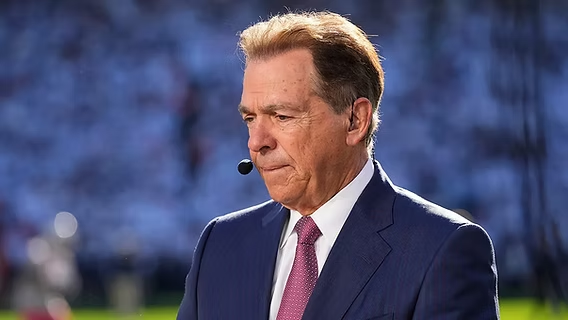
As Nick Saban entered his twelfth season at Alabama, he signed a contract extension that ensured his presence in Tuscaloosa through 2025.
For opponents, that reality presented a daunting challenge.
Even as programs invest millions in facilities, expand recruiting departments, hire former Saban assistants, and adopt many of his methods, the original architect remains on the sideline.
His rivals may work harder.
They may work smarter.
But as long as Saban continues leading Alabama, they may also need to work longer.
Because the greatest impact of the Saban era is not merely the championships he won—it is the fact that an entire sport has spent more than a decade trying to catch up.